For a lot of trades, a mini excavator changes what is possible. A landscaper can shape a garden bed in a morning, a plumber can open a trench without a crew of shovels, and a builder can prepare a pad or run drainage without waiting on a hire booking. The appeal is obvious. The question is whether a machine suits your work, your vehicle and your budget.
This post is general information to help you think it through. It is not financial advice and does not consider your circumstances.
Start with the work, not the machine
Before you look at a single listing, write down the jobs you would use the machine for and how often. Trenching for pipes and cables, small excavations, stump removal, trench backfill and loading a tipper are typical tasks. If you would use it a few times a year, hiring may be a better fit. If it would work most weeks, owning starts to make more sense.
Size and access
Mini excavators come in a range of sizes, and bigger is not always better. The things to consider include:
- Gate and access width. Measure the narrowest gate you regularly work through.
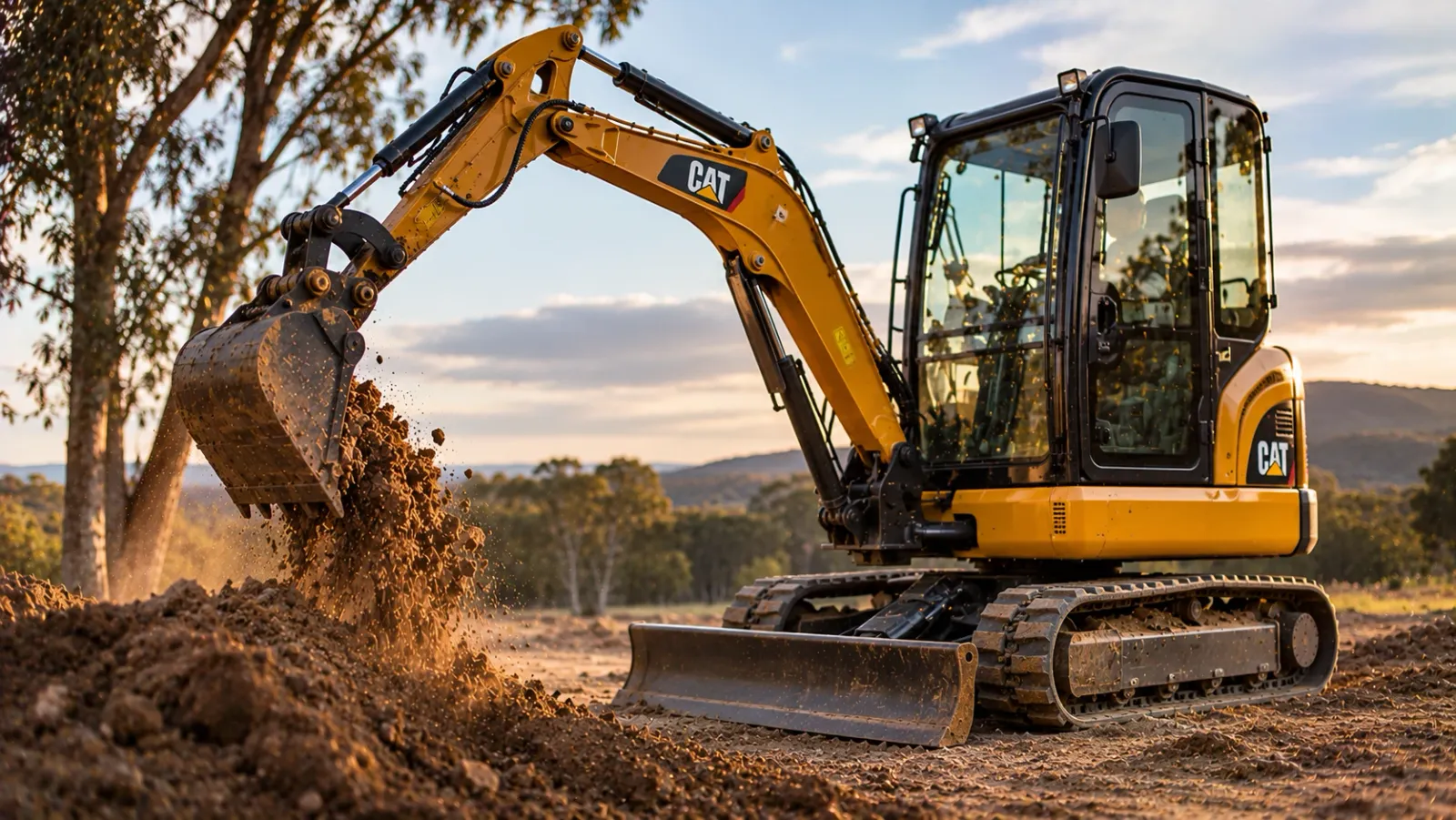
- Tail swing. Conventional tail-swing machines have a counterweight that swings out beyond the tracks. Zero or reduced tail-swing models stay within the track width when slewing, which helps in tight spots.
- Digging depth and reach. Check that the machine can dig as deep as your typical jobs require.
- Dozer blade. Useful for backfilling and levelling and often fitted to small machines.
- Ground pressure. Rubber tracks are kinder to lawns and driveways than steel.
Getting it to the job
This is where many first-time buyers get caught out. The machine needs to be transported safely and legally. Your tow vehicle, trailer, tow bar and brakes all have rated limits, and the combined weight of the machine, trailer and attachments must stay within them. Your licence class and your state or territory's road rules apply too, so check them with the relevant road authority before you buy. A machine you cannot legally move is of little use.
Machines also need to be secured properly with load restraints. Poor tie-down is a safety hazard, not just a ticket risk.
Attachments that earn their keep
The bucket that comes with the machine may not suit every job. Many tradies add a narrow trenching bucket, a wider cleaning bucket, an auger for post holes or a hydraulic hammer for concrete. Think about what you actually need rather than buying a full set. Check that the hydraulic flow and the quick hitch suit each tool. Our attachments guide covers the common options.
Running costs people forget
The purchase price is only part of it. Add up:
- Servicing, filters and fluids
- Tracks, bucket teeth and other wear parts
- Insurance
- Registration or other requirements that may apply, depending on your state
- Storage and security
- Fuel and transport
- Operator training and ticketing where required
For general workplace safety information on plant, see Safe Work Australia and your state regulator.
New or used?
A new machine brings a warranty and the latest features. A used one may cost less up front, but you take on more uncertainty. If you go used, inspect carefully, check the undercarriage, hydraulics and service records, and run a PPSR search before paying. Our buyer's checklist walks through what to look for.
Buy or hire?
Hiring can make sense for occasional or one-off jobs, or if you are testing whether machine work suits your business. Owning can suit a steady stream of work and gives you control over availability. Compare the realistic number of days you would use it against the total cost of owning, including the things listed above. Our post on buying versus hiring explores this further.
Paying for it
Many tradies fund equipment through business finance. Options and costs vary, and what is right depends on your business. Compare total costs and fees, not just the repayment, and speak to a licensed professional or your accountant. The ATO's website at ato.gov.au has general information on depreciation and deductions for business assets. See our finance basics page for general information. Finance is subject to lender criteria.
A practical checklist
- List the jobs and how often they come up.
- Measure your tightest access points.
- Confirm your vehicle, trailer and licence can legally move the machine.
- Pick a size and tail-swing type that fits.
- Choose attachments based on real work.
- Add up running costs.
- Inspect used machines carefully.
- Compare buying with hiring.
Resale matters too
Think about the day you might sell. Popular sizes from well-supported brands usually find buyers more easily. Keep service records, photograph the machine well and keep it clean. When you are ready, you can list your excavator free, or browse excavators if you are shopping for your first.